Travel brands used to pick keywords by search volume and difficulty. Now more travellers ask ChatGPT, Perplexity or Google's AI Mode things like "how should I plan Hokkaido with young kids?", and whoever gets cited in the answer may get the booking. This guide shows how to build a travel keyword map that serves both Google rankings and AI citations: the definition and prep, five research steps, common questions, a tool comparison and a rollout plan. Industry figures link to public sources; unsourced performance numbers are left out.
Key takeaways
- Don't pick words by search volume alone. AI answers specific situational questions, so long-tail questions and scenario terms matter more.
- Track rankings and AI citations together. That's the basis of a dual-track strategy.
- Prioritise commercial-investigation long-tail terms (compare, choose, is it suitable). They sit closest to booking.
- Give verifiable specifics on the page: location, price range, duration, who it suits and its limitations.
1. Travel GEO visibility: definition and prerequisites
Travel GEO visibility is how often a travel brand's pages are cited or mentioned in AI search answers from ChatGPT, Perplexity, Google AI Overviews and AI Mode. It's related to Google rankings, but it isn't the same thing.
Why it matters now, according to public data:
- Phocuswright's November 2025 research found nearly four in ten U.S. travellers used generative AI to research trips in the past 12 months, up 11 points in a year. AI-using travellers skew younger, report higher income and take more trips (Phocuswright, Nov 2025).
- An Amadeus survey of 2,000 U.S. travellers (Sept 2025) found 17% use AI tools such as ChatGPT and Perplexity for travel inspiration, up from 13% a year earlier: about 30% growth, the fastest of any source (Amadeus, Sept 2025).
- Pew Research found users clicked a result link on about 8% of Google searches that showed an AI summary, versus about 15% without one (Pew Research, July 2025).
Two consequences follow. "Rankings hold, clicks drop" will become more common, and the questions travellers ask AI tend to be longer and more specific than what they type into a search box.
| | Rankings only | Dual track (rankings + AI citations) | | --- | --- | --- | | How you pick words | Search volume, difficulty | Plus real scenario questions travellers ask AI | | How you write | Generic guides, destination overviews | Plus exact locations, price ranges, durations, limitations | | How you measure | Positions and clicks | Plus whether AI answers cite your page |
AI citations depend on specific, checkable information. "Best hotels in Bali" is hard to cite. "About a 10-minute walk to Ubud Market, infinity pool, suitable for kids under 6, peak-season rates on the booking page" gives AI facts it can quote. The GEO study by Princeton and others (KDD 2024) also found in experiments that adding statistics, cited sources and quotations increased visibility in generative engine answers (arXiv:2311.09735).
Before you start: a verified Google Search Console property, a list of your current tours and pages, and the real questions travellers have asked in support chats, enquiries and reviews (your best raw material).
2. Five steps to build a travel keyword map
Step 1: Map search intent
Sort terms into four groups: informational (guides, best time to go), commercial investigation (compare, choose, worth it), transactional (book, price) and navigational (brand names). Commercial investigation sits closest to booking, and it's the "help me choose" question people most often ask AI.
Step 2: Find scenario long-tail terms
Many SEO courses say zero-volume terms are worthless, but keyword tools estimate volume and often miss very long questions. The questions travellers ask AI are exactly that long, e.g. "can I rent a campervan in Hokkaido with a golden retriever?". The test isn't the tool's number. It's whether real travellers have asked it (check support logs and enquiries) and whether your product can answer it clearly.
Step 3: Build a semantic map
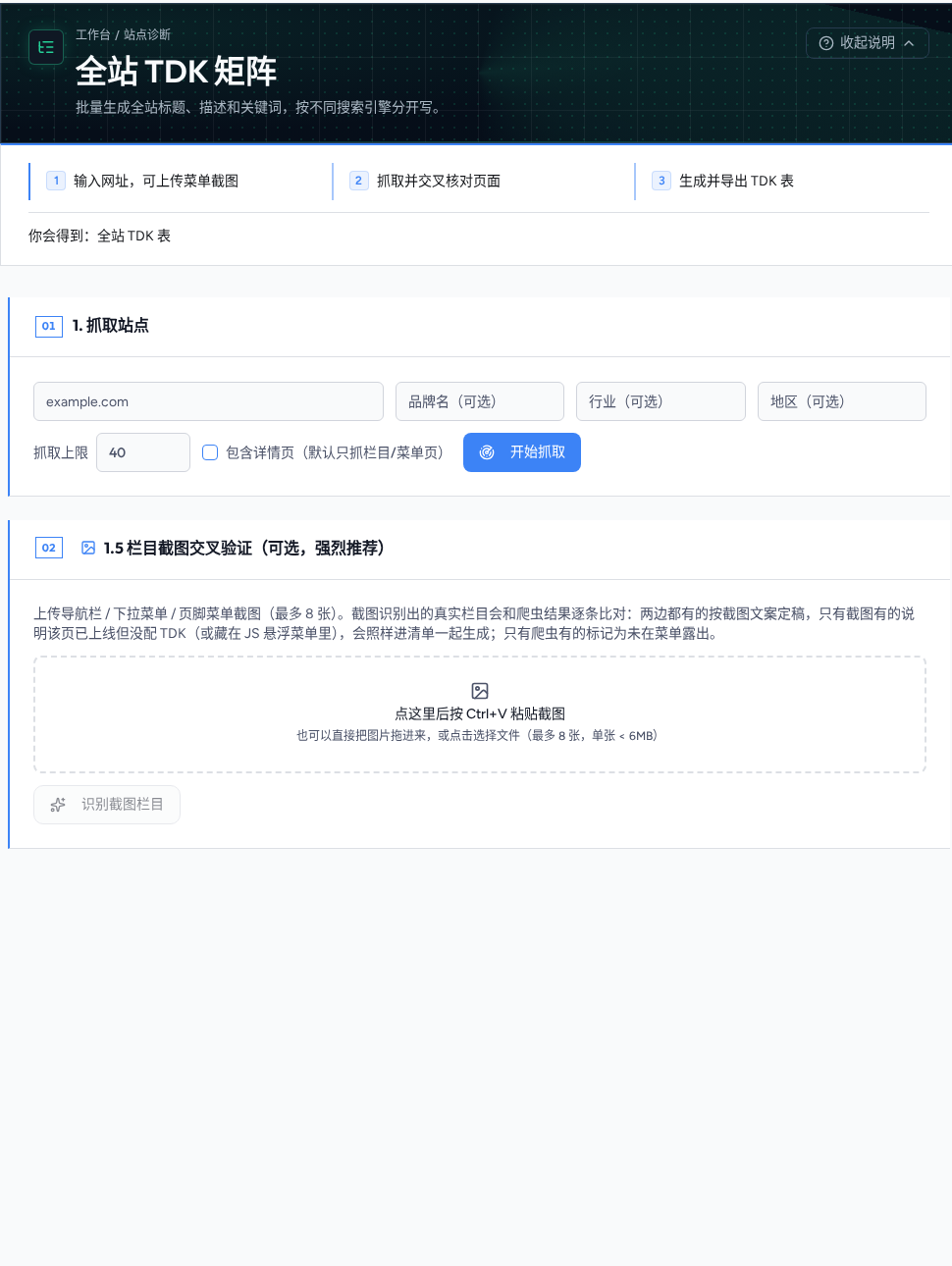
Break each core term into the entities and scenarios behind it. For "Tokyo private driver", go beyond "price" and "vehicle type" to "Narita airport pickup", "English-speaking driver", "child seats", "luggage allowance" and "late-night flights". Use the keyword matrix to organise these by intent and tour. The screenshot shows the real 23SEOGEO input screen, not client query data.
Step 4: Add structured data
Mark up what the page can confirm using Schema.org: tour products, prices, opening hours, ratings and FAQs. Make sure the markup matches what's visible on the page. Structured data helps machines read the page but doesn't guarantee rankings or citations.
Step 5: Monitor AI citations
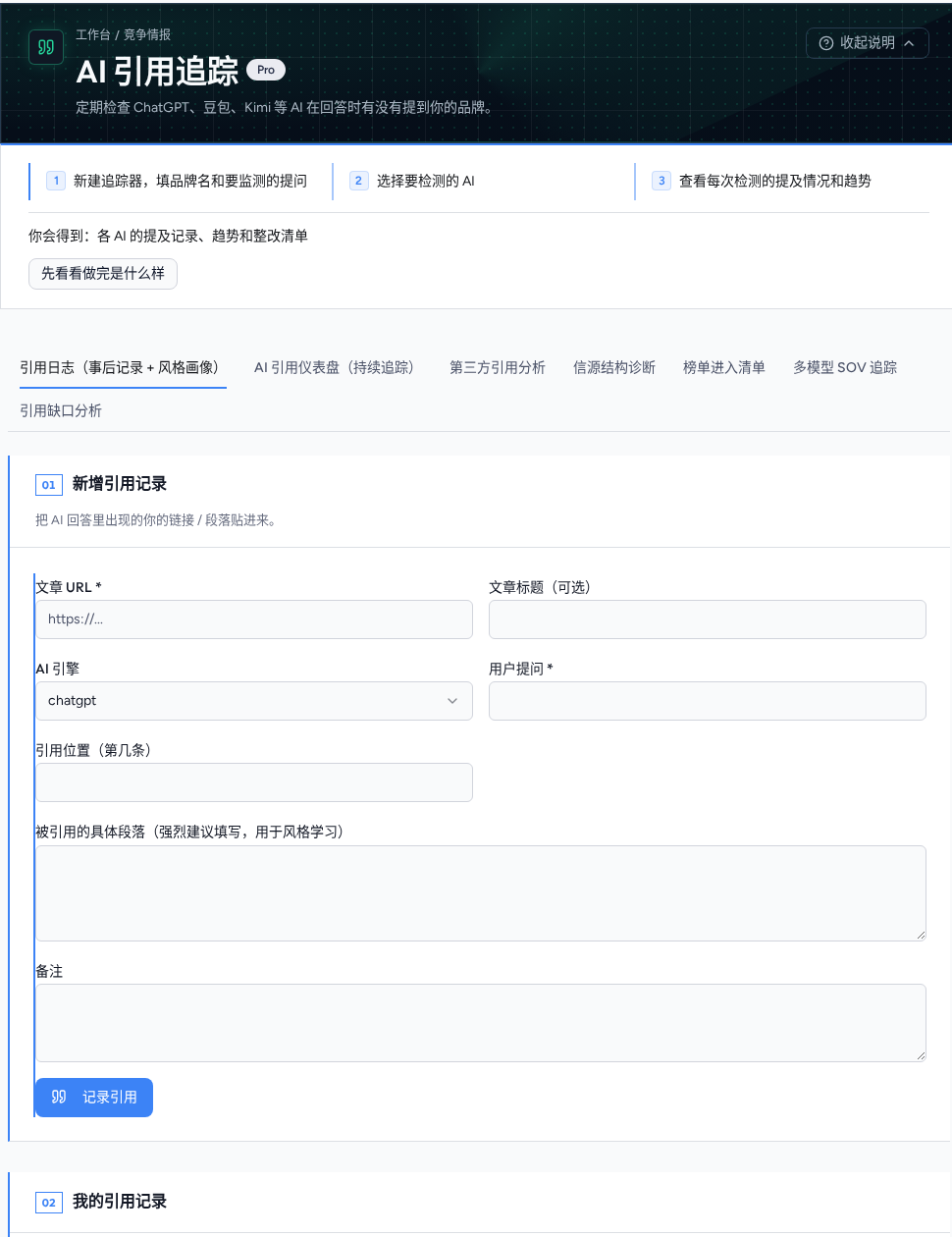
Fix a set of real traveller questions, ask them regularly in several AI engines, and record the question, engine, date and which URLs the answer cites. Save the log in AI citation tracking so you can compare over time.
Following these five steps, even a small team can build a keyword map it can keep updating at low cost.
3. FAQ: common questions from travel brands
How do I find high-converting travel keywords?
Look at search intent and AI conversation intent together. Instead of head terms like "Phuket travel guide", find specific questions from specific travellers, e.g. "how to choose a pet-friendly campervan rental". Tools may show no volume, but these are real phrasings travellers use with AI, and they sit close to the decision stage.
How can a travel site get cited by ChatGPT and Perplexity?
Offer unique information, clear structure and real experience: comparison tables, concrete steps, price ranges, and when a tour does or doesn't suit someone. Make sure robots.txt doesn't block AI search crawlers. For example, Perplexity recommends allowing PerplexityBot so a site can appear in its results (Perplexity docs). Even then, a citation isn't guaranteed.
Why is traditional travel SEO getting harder?
Some informational answers now appear directly in AI summaries, so users don't click through. The Pew data above shows clicks nearly halve when an AI summary appears. Keyword strategy needs to move from generic information to unique insight and specifics that help people decide.
Is a longer FAQ section always better?
No. FAQs that mechanically repeat basic questions don't help travellers and give AI nothing new. Keep only the questions travellers have actually asked and that you can answer clearly.
4. Tools for dual-track travel SEO and GEO
| Dimension | Traditional SEO tools | With AI visibility tracking added | | --- | --- | --- | | Metrics | Search volume, backlinks, difficulty | Plus citation and mention logs from AI answers | | Channels | Traditional search engines | Plus ChatGPT, Perplexity, Google AI Overviews | | Keyword sources | Historical volume estimates | Plus real questions and follow-ups seen in AI answers | | Feedback | Rank tracking | Which URLs get cited, logged per question |
Many traditional SEO tools are adding AI visibility features. When choosing, check two things: can it log citations by specific question and engine, and can you export the raw records to verify them? 23SEOGEO's AI citation tracking and keyword matrix cover both, but they record observations and can't be converted directly into bookings or traffic.
5. Rolling out dual-track SEO and GEO on a travel site
- Audit existing pages: find pages with no impressions or duplicated content, and merge pages with the same intent.
- Add unique specifics: exact locations, transport, duration, price ranges and who it suits. Give prices as ranges and note "see booking page" so they don't go stale.
- Fix the technical basics: check crawlability, mobile experience and load speed, and mark up opening hours, prices and ratings with Schema.org.
- Monitor and iterate: compare Search Console data and AI citation logs monthly, and adjust topics and content based on the results.
These four steps protect your traditional search traffic while steadily building visibility in AI answers.
Sources
- Phocuswright: Search slips, AI surges (Nov 2025)
- Amadeus: Gen AI and social media transform how U.S. travelers plan travel (18 Sept 2025)
- Pew Research Center: Google users are less likely to click on links when an AI summary appears (22 July 2025)
- Perplexity: Perplexity Crawlers documentation
- Aggarwal et al.: GEO: Generative Engine Optimization (KDD 2024)
Related reading
For itinerary title tags, see the independent-store title workflow. To choose sources of evidence, see webmaster tools by task.
About this article
Written by the 23SEOGEO team. Industry figures come from the public sources listed above, with their publication dates. Sample questions are not client queries, and screenshots show product interfaces, not traffic or citation outcomes.