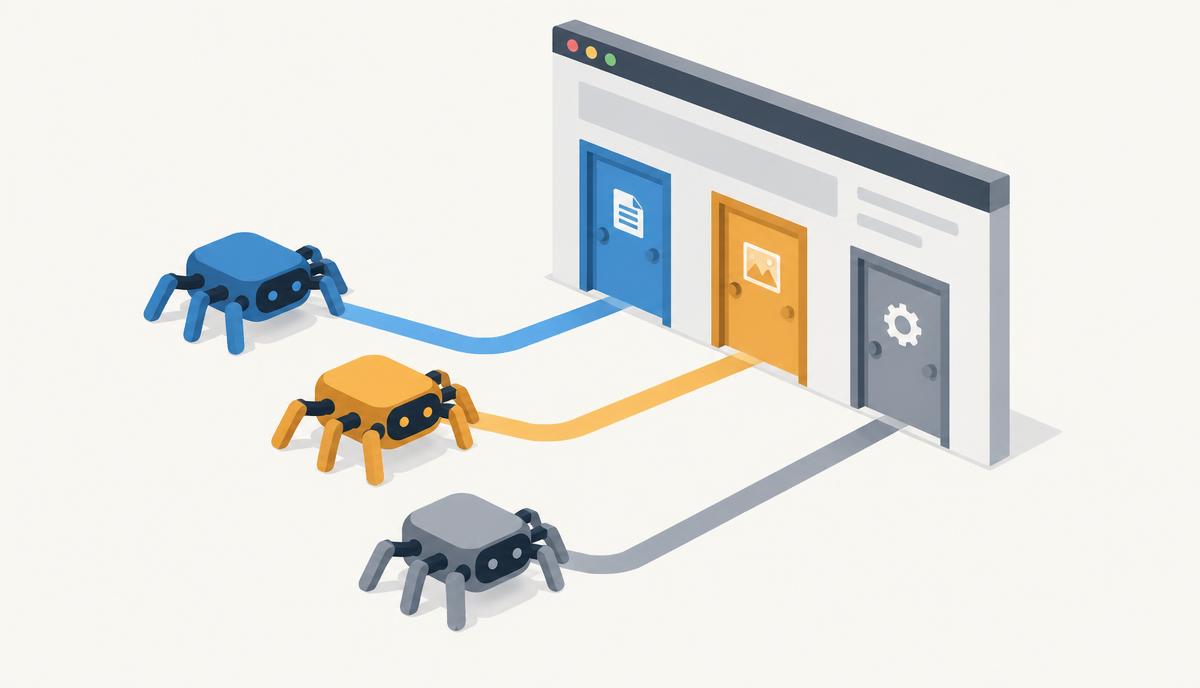
Summary: OAI-SearchBot is the OpenAI user agent that surfaces websites in ChatGPT search results. If it is blocked, your pages may not appear as links in ChatGPT search answers. It is separate from GPTBot, which collects training data. Allowing it is a prerequisite for ChatGPT search visibility, not a guarantee of citations.
What OAI-SearchBot is
According to OpenAI's crawler overview, OAI-SearchBot is used to link to and surface websites in ChatGPT's search features. Sites that opt out will not be shown in ChatGPT search answers, although they may still appear as navigational links. OpenAI also says robots.txt changes for search take roughly 24 hours to apply.
A common cause of missing ChatGPT visibility is a CDN or security preset that blocks every AI-related user agent. Check that preset before rewriting any content.
❌ Common mistake: blocking every AI bot to protect data while expecting ChatGPT citations. ✅ Better approach: allow OAI-SearchBot on public marketing and documentation pages, and decide separately on GPTBot.
OAI-SearchBot vs GPTBot vs Googlebot
| Crawler | Operator | Purpose | Controlled by | |---|---|---|---| | OAI-SearchBot | OpenAI | ChatGPT search results | robots.txt User-agent: OAI-SearchBot | | GPTBot | OpenAI | Training generative models | robots.txt User-agent: GPTBot | | ChatGPT-User | OpenAI | User-requested page visits | User-initiated; OpenAI notes robots.txt rules may not apply | | Googlebot | Google | Google Search, including AI Overviews | robots.txt and page-level directives |
The difference that matters is purpose, not "old SEO vs new SEO". Googlebot indexes pages for Google Search; OAI-SearchBot fetches pages so ChatGPT can link to them. Neither OpenAI nor Google publishes a rule that keyword density or a particular content format guarantees selection, so treat claims like "AI prefers academic structure" as hypotheses to test, not facts.
robots.txt configuration
Allow ChatGPT search while refusing training:
Keep private paths private with authentication; robots.txt is a crawling instruction, not access control (Google robots.txt intro). After deploying, confirm in server logs that OAI-SearchBot receives 200 responses rather than 403 or challenge pages from a firewall.
What helps after the crawler is allowed
Once the page is reachable, the practical work is the same as for any good search page:
- Answer the buyer's question in the first paragraph, in plain language;
- Put the main content in server-rendered HTML so it can be read without running scripts;
- State facts with their source and date, and keep first-party data (your own product specs, pricing pages, documentation) accurate and consistent;
- Use structured data that matches visible content, such as Organization, Product or Article.
None of these is a guaranteed ranking factor for ChatGPT; they reduce the chance that your page is unreadable or ambiguous.
How to measure ChatGPT search visibility
- Choose a fixed list of real customer questions, preferably from Search Console queries and sales conversations;
- Re-test them on a schedule and keep the prompt, date, answer and links as evidence;
- Count brand mentions and page citations separately; mark untested engines as "not observed";
- Track visits from chatgpt.com and enquiries from those sessions separately from other traffic.
23SEOGEO's citation tracking stores the question, engine, date, answer and source links for each check, and AI traffic tracking separates AI-platform visits from enquiries.
FAQ
What is OAI-SearchBot?
It is OpenAI's crawler for surfacing websites in ChatGPT search results. Blocking it may keep your pages out of ChatGPT search answers.
Is OAI-SearchBot the same as GPTBot?
No. GPTBot collects data for training models; OAI-SearchBot is for search. You can allow one and block the other.
How long does a robots.txt change take?
OpenAI states that search-side adjustments take about 24 hours after the robots.txt update.
Does allowing OAI-SearchBot guarantee ChatGPT citations?
No. It only makes pages eligible to be fetched. Whether a page is cited depends on the question and on what other sources exist.
Official sources and author
- OpenAI: Overview of OpenAI Crawlers
- Google: Introduction to robots.txt
- Google: AI features and your website
Sources checked on 2026-11-06; this is our verification date, not the publication date of the documents. robots.txt snippets are configuration examples, not client case studies; images are editorial illustrations.
Author: Miss.Zuo, SEO article writer; published by the 23SEOGEO team. See the author profile at the top of the article.