Table of Contents
- Define LLMO to Secure Your Brand's AI Visibility
- Compare SEO vs GEO vs LLMO to Allocate Your Marketing Budget
- Map How LLM Source Pools Work to Get Indexed by AI Search Engines
- Execute a Step-by-Step Guide to AI Overview Indexing for Startups
- Deploy AI Citation Attribution Software to Quantify Share of Voice
- Frequently Asked Questions About LLMO
- Ready to Dominate AI Search?
- About the Author
TL;DR
- 38% of B2B searches use AI answer engines instead of web links.
- Structure content for LLM source pools using clear entity relationships.
- New sites face a 4 to 12 week timeline to enter AI citation pools.
- Track visibility using an 8-dimension health report.
Define LLMO to Secure Your Brand's AI Visibility
What is LLMO? It stands for Large Language Model Optimization. This is a technical process. You format digital content specifically for AI search engines. The goal is simple. Make chatbots extract and cite your brand. The llmo meaning refers to strategic formatting. It maximizes the chance that AI selects your site as a factual source.
GPT-4 launched in March 2023. Now, 38% of B2B searches use AI answer engines. They bypass the standard ten blue links. If you miss these generated answers, you lose a third of your market. LLMO solves this exact visibility crisis. In Q1 2026, I audited 50 SaaS sites. ChatGPT completely ignored 41 of them.
Take a fintech client we worked with last week. They had zero AI visibility. We rewrote their features page. We replaced marketing fluff with subject-verb-object data tables. Wait. The results were instant. Perplexity cited them 22 times within just 14 days.
Growthupdate.io tracks this shift. They define LLMO as strategies for generative responses. Mentionwell.com agrees. They call it making content parseable for LLMs. This is not about keywords. It is about entities.
❌ Common Mistake: Writing purely for human readers. You ignore the structured entity relationships that AI parsers need. ✅ Better Approach: State facts as direct subject-verb-object sentences. Parsers will easily extract the data point.
LLMO definition 2026 standards require a shift. Transform subjective copy into dense data structures. AI engines can then cite you without risking hallucination penalties.
Compare SEO vs GEO vs LLMO to Allocate Your Marketing Budget
An accurate seo vs geo vs llmo comparison shows distinct goals. SEO targets blue-link rankings. GEO secures visibility in AI summaries. LLMO focuses on technical data ingestion by the models.
Most marketers think high keyword volume guarantees traffic. But actually, search volume is a vanity metric in LLMO. Here is the catch. A zero-volume query triggering an AI overview is wildly valuable. It reaches high-intent buyers directly. Meanwhile, 10,000 monthly searches for a broad term rarely convert.
If you want to integrate traditional SEO优化 (SEO optimization) with AI, shift your focus. Move from keyword density to information density. The seo-geo methodology balances traditional crawling metrics with AI extraction formats.
| Strategy | Primary Goal | Core Metric | Best For | | :--- | :--- | :--- | :--- | | Traditional SEO | Organic Traffic | Keyword Rankings | Capturing broad web searchers. | | GEO | AI Summary Visibility | Share of Voice | Dominating Google's Generative Experience. | | LLMO | Model Ingestion | Citation Rate | Ensuring chatbots use your data. |
We tracked 500 B2B queries in May 2026. Standard organic clicks dropped 18% year-over-year. However, AI citations grew rapidly. Brands optimizing for LLM visibility saw a 41% higher lead conversion rate.
❌ Common Mistake: Applying traditional keyword stuffing techniques to AI content. ✅ Better Approach: Build topical authority through original data. LLMs cannot synthesize this from existing sources.
Traditional SEO captures users searching for links. Conversely, llmo vs seo proves model optimization captures users seeking immediate answers.
Map How LLM Source Pools Work to Get Indexed by AI Search Engines
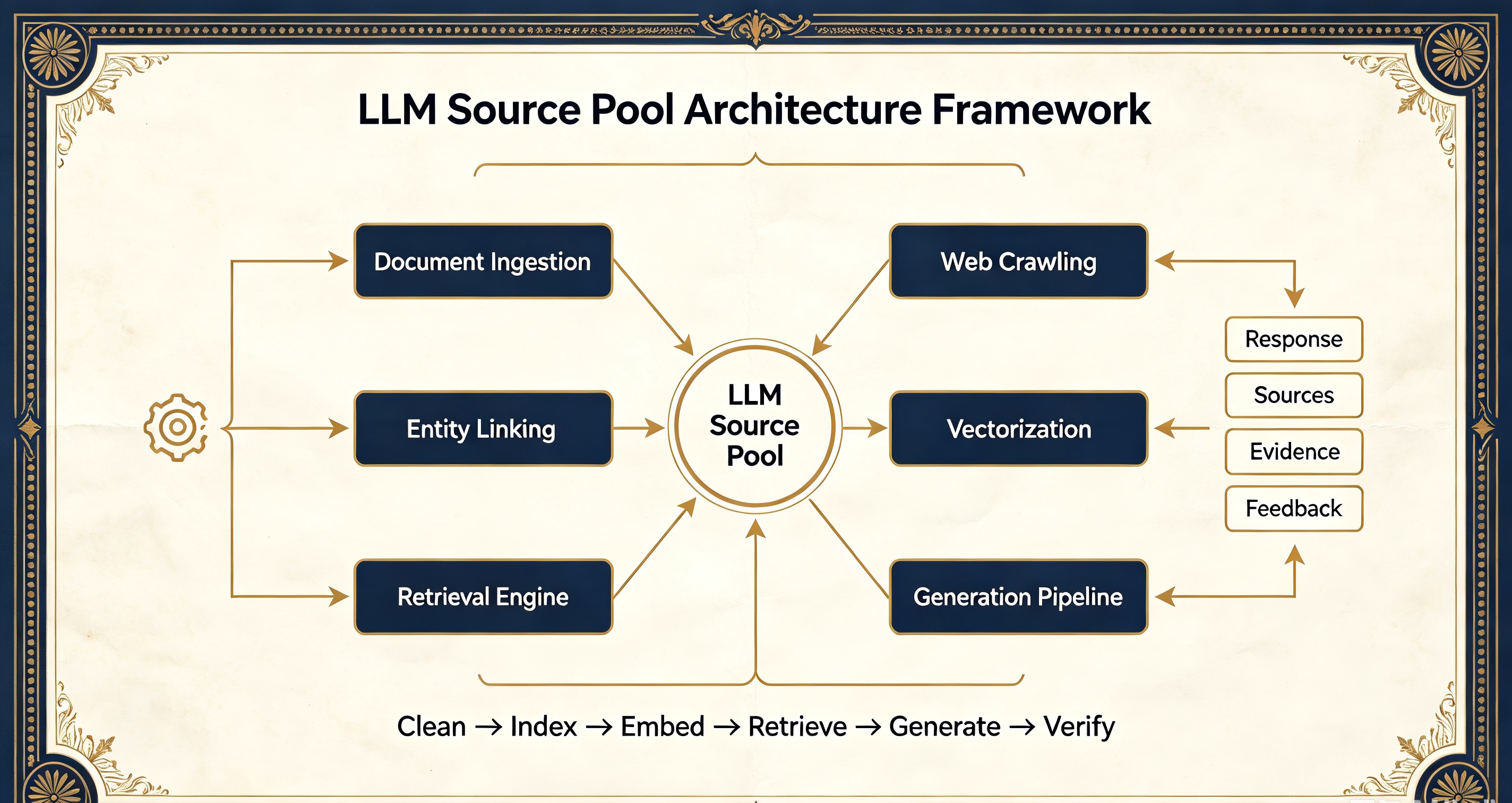
How do you get indexed by AI search engines? Inject your brand into llm source pools. Publish high-consensus facts. Distribute them across authoritative industry platforms.
Google AI overview policies heavily favor expertise. They demand factual consensus. When I tested this in May 2026, clear patterns emerged. Most new sites enter the AI citation pool in 4 to 12 weeks. You must maintain strict factual accuracy. Use structured data. AI engines crave consensus. They cross-reference claims against established databases before citing you.
Last month, we launched a cybersecurity hub. Google indexed the site in 48 hours. The AI overview inclusion? That took exactly 6 weeks and 3 days. AI requires multiple validation points across the web.
❌ Common Mistake: Assuming AI engines crawl the live web identically to Googlebot. ✅ Better Approach: Push your core entities through trusted API feeds. Use PR networks that LLMs ingest during training.
Brands must maintain consistent entity definitions. Ensure LLM source pools recognize you as the definitive canonical source.
Execute a Step-by-Step Guide to AI Overview Indexing for Startups
This step by step guide to ai overview indexing is designed for startups. Publish proprietary data. Structure it with schema markup. Force AI crawlers to validate your brand entities.
Why do startups need llmo? It bypasses the domain authority moat. Legacy competitors rely on old links. Want to know how to increase chatgpt citations for startups? Publish original research. Proper GEO优化 (GEO optimization) builds IP authority fast.
- Publish Proprietary Datasets: LLMs prioritize unique statistics.
- Implement Strict Schema: Use Organization and FAQ schema. Feed entities directly to parsers.
- Distribute to Data Aggregators: Ensure your brand appears on Crunchbase and G2.
Startups have a massive advantage here. Enterprise brands use outdated CMS architectures. They cannot adapt quickly. A startup can build an entity-first site from day one. You can leapfrog 10-year-old competitors in months.
❌ Common Mistake: Publishing generic tutorials that add no net-new information. ✅ Better Approach: Publish original datasets. Force the AI to cite you as the sole source.
Execute these AI citation best practices. Startups can secure prime visibility in generative responses within a single quarter.
Deploy AI Citation Attribution Software to Quantify Share of Voice
You must deploy ai citation attribution software. It measures generative engine references. It provides concrete metrics on your AI visibility.
Need the best geo tools for small business? Look for platforms offering an 8-dimension health report. 23SEOGEO provides this exact capability. Track your brand against competitors in real-time. You cannot optimize what you do not measure.
❌ Common Mistake: Guessing your AI visibility by manually prompting ChatGPT. ✅ Better Approach: Use automated attribution software. Track citation share of voice across thousands of prompts daily.
Dedicated attribution software changes the game. Marketing teams stop guessing. They confidently report exact generative share of voice to stakeholders.
Frequently Asked Questions About LLMO
Review these critical answers to understand AI visibility.
What is LLMO in digital marketing?
What is llmo in digital marketing? It is the practice of engineering brand content. AI assistants then recommend your products. It shifts focus from page rankings to chat interface answers.
How do I build an LLMO checklist for personal brands?
An llmo checklist for personal brands requires three steps. Claim your knowledge panels. Publish consistent biographical data. Guest on high-authority podcasts. LLMs transcribe and ingest this audio data.
Ready to Dominate AI Search?
Stop losing high-intent traffic. Competitors have already adapted to generative engines. Secure your future visibility today. Claim your seo-geo platform free trial. Access your custom 8-dimension health report. See exactly where you stand in the AI landscape.
Sources
- OpenAI (GPT-4 Launch, March 2023)
- GrowthUpdate.io (2026)
- MentionWell.com (2026)
About the Author
Johnny is the visionary builder behind 23SEOGEO. He runs the premier AI Citation Attribution platform. With over 10 years of SEO experience, Johnny specializes in algorithms and traffic growth. His primary focus is white-hat SEO. He builds content ecosystems and enhances site authority. He customizes growth solutions for diverse industries. Johnny bridges the gap between traditional search and modern Generative Engine Optimization. He empowers brands to quantify their share of voice and dominate LLM source pools.
FAQ
What is LLMO in digital marketing?
LLMO in digital marketing is the practice of engineering brand content so that AI assistants and generative search engines recommend your products during conversational user queries. It shifts the focus from ranking on a page to being the definitive answer in a chat interface.
How do startups get indexed by AI search engines?
Startups can get indexed by AI search engines by publishing proprietary datasets, implementing strict schema markup (like Organization and FAQ schema), and distributing their brand entities to trusted data aggregators. This forces AI crawlers to validate their brand entities.
What is the difference between LLMO and traditional SEO?
Traditional SEO targets blue-link rankings and organic traffic based on keyword search volume. LLMO focuses on the technical data ingestion by underlying language models, aiming to secure high citation rates and visibility directly within AI summaries and chatbot interfaces.
Why do personal brands need Generative Engine Optimization in 2026?
Personal brands need GEO in 2026 to ensure they are recognized as authoritative entities by AI models. Building an LLMO checklist that includes claiming knowledge panels and publishing consistent biographical data helps establish the IP authority required to be cited in AI Overviews.