A small B2B team does not need a stack of tools promising automatic rankings. It needs a way to publish accurate answers, observe what search engines actually show, and measure citations without treating an AI-generated draft as proof of results. This guide is a decision framework, not a benchmark of vendors we have not tested.
Start with a real workflow, not a vendor leaderboard
Choose one specific buyer question, such as “How do small B2B teams compare AI marketing tools?” Record the existing page, its Google Search Console indexing status, queries and impressions, and any AI answer that cites it. Then test each tool against the same task. Writing assistance, site auditing, query research and citation tracking solve different problems; do not compare them by a single score.
| Job | What to test | What counts as evidence | | --- | --- | --- | | Drafting | Can your team fact-check, edit and approve the output? | The approved source document and revision history | | Site review | Does the tool expose the exact page and technical issue? | A reproducible URL, crawl response and fix | | Query research | Can you map a question to buyer intent? | Search Console queries and the published page | | AI citations | Does the answer link to your actual page? | Prompt, engine, date, quoted answer and cited URL |
A real interface example: what the modules actually show
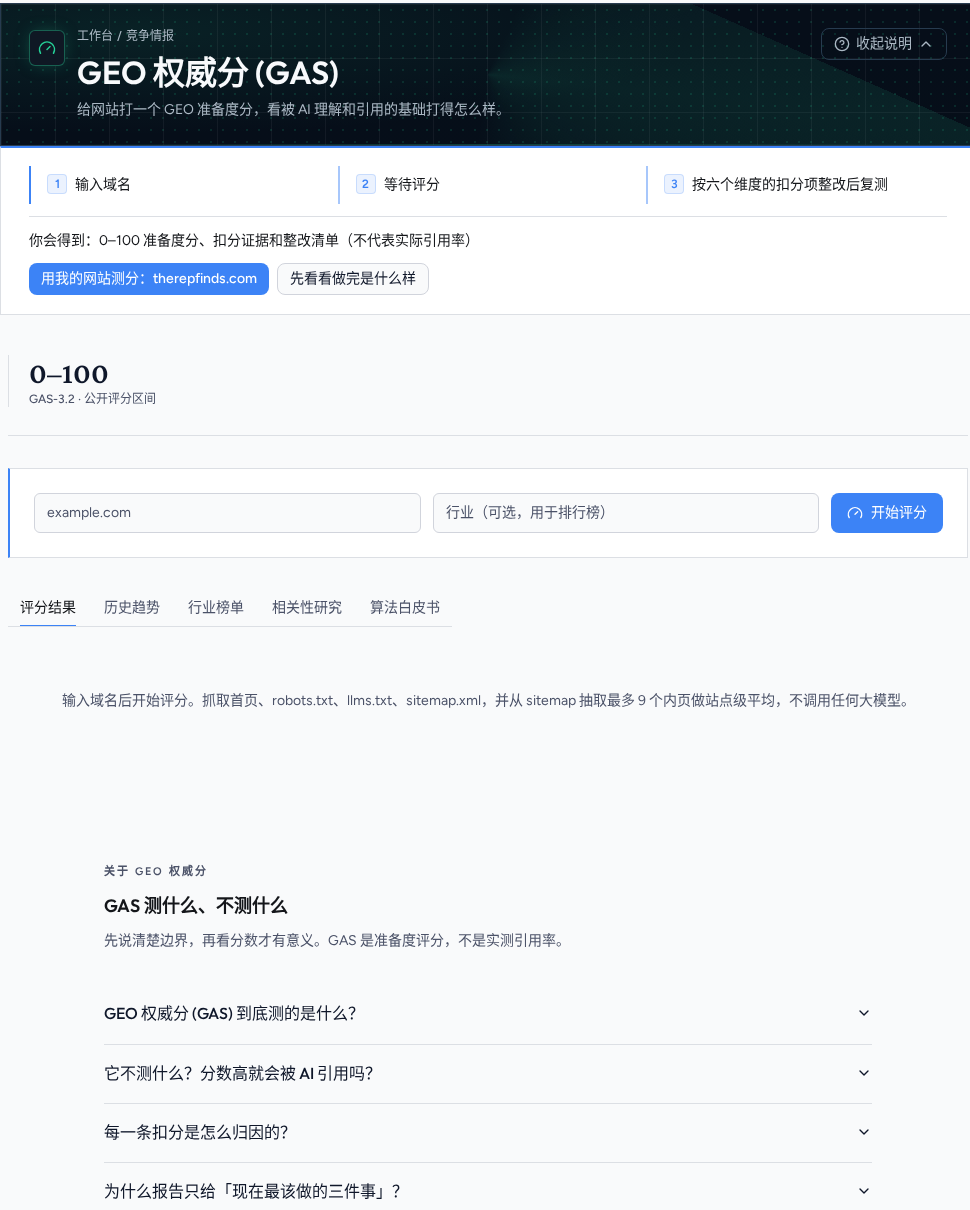
The following screenshot is a capture of the 23SEOGEO GAS scoring input screen on September 30, 2026. It shows the domain input and the stated review scope. It is not a scoring result and does not show a customer's growth. Use it to establish a baseline before deciding what to fix.
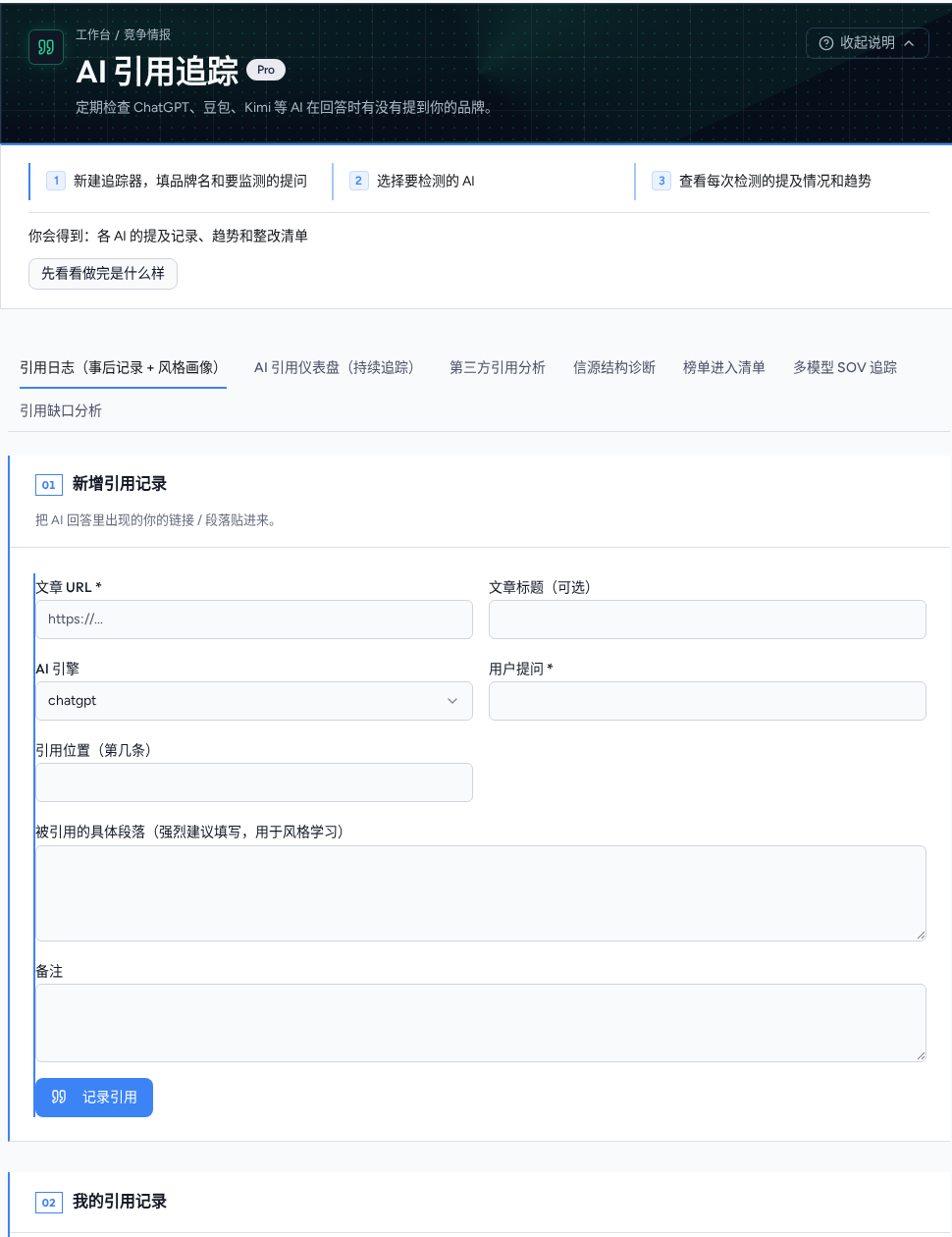
The next screenshot shows the 23SEOGEO AI citation-tracking form: article URL, engine, prompt, citation position and the evidence field. This is an empty form, not proof of any citation. A defensible citation claim requires a saved answer and an independently openable source URL.
Compare writing assistants without inventing a winner
Tools such as Jasper and Copy.ai can help teams draft copy; 23SEOGEO provides site diagnosis and citation-related workflows. We have not run a controlled head-to-head test of these products, so this article does not rank them by quality, price, traffic lift or citation rate. For a fair internal trial, give the same brief and source pack to each writing tool, have a human editor audit every factual claim, and time the full review cycle—not just the first draft.
For a small B2B team, a narrow starting setup is: one accountable editor, one verified Search Console property, one page with a real product explanation, a repeatable citation log, and a monthly review. Add tools only when a specific bottleneck has been demonstrated. Screenshots of a dashboard are product evidence, not customer case studies.
A four-week test plan
- Week 1: Check whether the test page is indexed. Save the exact canonical URL and Search Console status. If it is only discovered but not indexed, do not call missing rankings “content decay.”
- Week 2: Rewrite for one buyer question. Add a concise answer, comparison criteria, real examples from your own product, and links to supporting pages. Do not quote inaccessible analyst reports or invent percentages.
- Week 3: Publish, update the sitemap if needed and monitor actual indexing and search queries. Use Search Console URL Inspection to request indexing manually when appropriate; submission does not guarantee inclusion.
- Week 4: Repeat the same prompts in the same engines. Log the answer and source URL. Compare only like-for-like observations and record “not determined” when the engine gives no usable result.
When should you change the title?
When a page is indexed and earns impressions but few clicks, compare its actual Search Console queries with its title and description. If it is not indexed, prioritize discovery, crawl and content quality checks first. We cannot promise a timeline or a percentage traffic gain from this workflow.
Evidence note: screenshots show product interfaces captured September 30, 2026; they do not represent completed tests. No Gartner, Forrester, external vendor benchmarks or unverified customer outcomes are claimed here.