A property page can be useful to both travelers and AI assistants only when its details are accurate and publicly accessible. Neither structured data nor an AI-written description guarantees a Google AI Overview, a Perplexity citation or a direct booking. This is a checklist, not a vacation-rental client case study.
Check discovery before calling a page underperforming
As of September 30, 2026, Google Search Console returned “URL is unknown to Google” for this English article. That is not evidence of a ranking drop or of inadequate traveler demand. Check the exact URL in URL Inspection, confirm the page can be fetched and linked internally, and inspect actual Search Console impressions after Google discovers it. A URL in a sitemap may still be unknown or unindexed. Request indexing manually in Search Console if appropriate; it is not a guarantee.
Build a factual property information sheet
For each rental, keep an owner-approved record of the location, occupancy, room and bed setup, accessibility, amenities, check-in rules, fees, cancellation terms, photos and date last verified. Do not publish guest reviews, photos or claimed booking results without permission. If information changes by season, mark the effective date and refresh dependent pages. This is the same source-of-truth discipline a B2B team uses for product facts.
Turn traveler questions into useful pages
Answer narrow questions such as “Is this rental accessible without a car?” or “What does the cancellation policy cover in winter?” A page should link to the corresponding current booking or property policy. A generic list of “best luxury stays” without verified details helps neither travelers nor indexers. Compare pages for overlapping intent before publishing several near-identical guides.
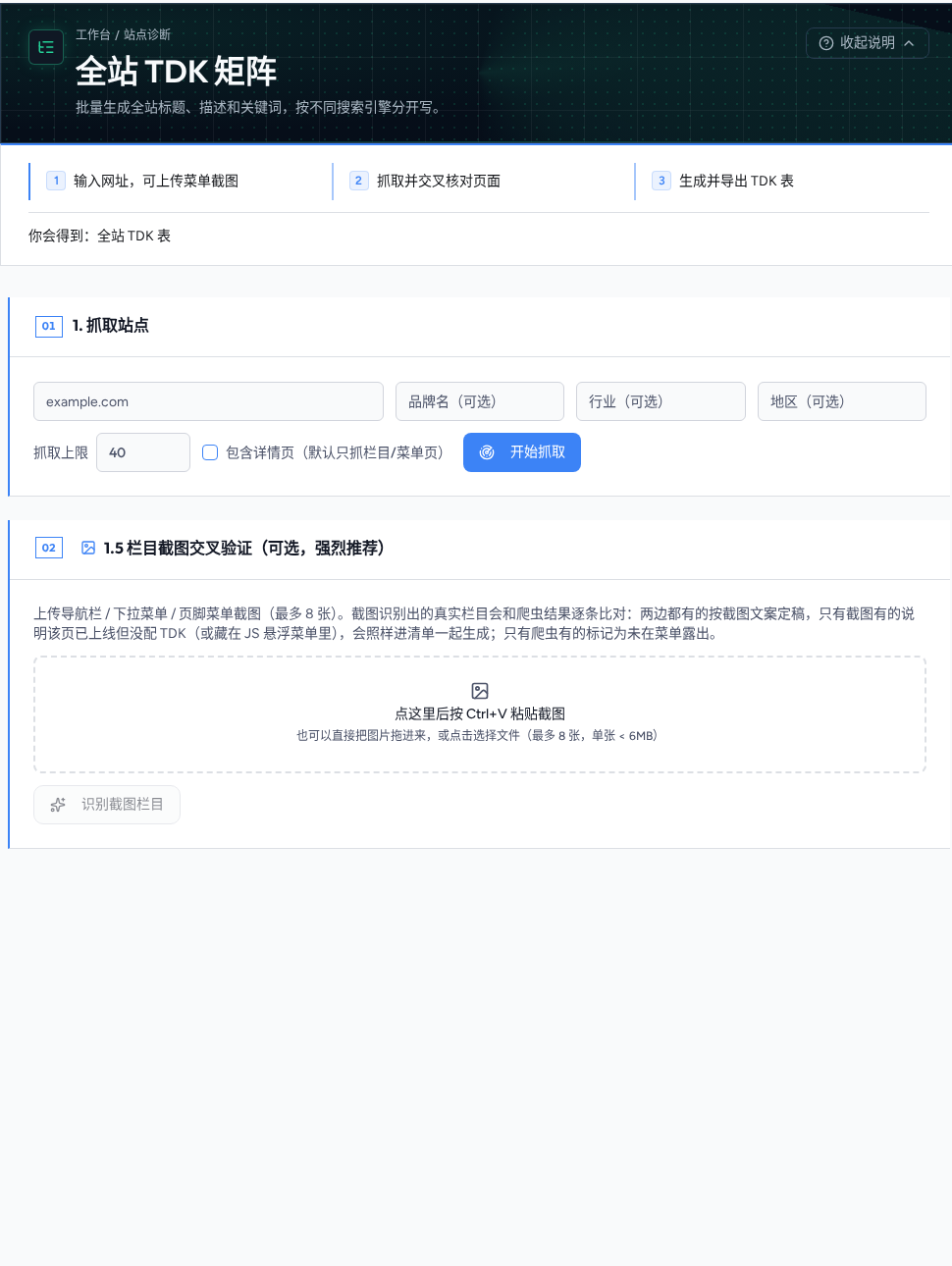
The screenshot is the 23SEOGEO site-wide TDK matrix interface captured September 30, 2026. It shows how a team can review titles and descriptions. It contains no property records, no search performance and no customer booking data.
Decide what to keep, merge or remove
Do not take down a page solely because it has zero impressions while Google does not know its URL. First establish discovery and a meaningful observation window. If two published pages answer the same question, consolidate unique verified facts into the stronger page and redirect the redundant URL to the relevant replacement. If a page has no unique information and no suitable replacement, remove it only with an explicit editorial decision. Our separate travel-site guide covers general travel websites; this page stays focused on property facts and rental-specific questions rather than duplicating that guide.
What would demonstrate progress?
Use Search Console for indexed status, impressions, clicks and actual queries; use a citation log for saved answers and source URLs; use analytics or server logs for visits and bookings. Keep those three signals separate. Do not promise a direct-booking percentage, a guaranteed AI placement, or a customer case study without source data and permission.
Evidence note: the screenshot illustrates an empty product workflow. No hotel or rental customer results were used.